As a middle school reading intervention teacher, I see tons of students and have little time to work with each group. Most of my middle school students (6-8) are reading 2-3 years below grade level. Many struggle with decoding too. With 43-minute classes and nearing the end of the school year, I am wanting my students to practice as many skills as possible in texts where they feel 100% successful.
How do I group my students?
It is important to remember that intervention groups should always be fluid. Meaning students move in and out of groups based on similar needs. Additionally, I pay close attention to who works well together and who doesn’t. There is nothing worse than when a group gets nothing done because two students butt heads the entire time.
How do you choose what skills to focus on?
Since most of my students have MANY skills that need additional support, I try and start with the most important. In middle school, students are expected to infer, draw conclusions, and synthesize all the time. I start here. Students can practice each skill by identifying character traits, setting, understanding character motivations, author’s point of view and perspective, and even author word choice. Honestly, my students can work on the four skills for weeks on end. My goal is that they see how important each skill is and why authors leave out specific information.
Part of my required lessons is decoding and building grade-level vocabulary knowledge. Many of my students lack the ability to decode 3+ syllable words and have limited strategies to do so. This is another aspect of my guided reading and center work. This can easily be embedded in any reading mini-lesson. I simply have a whiteboard, a couple of sensory poppers, and work through vocabulary already identified in Jen’s Digital Small Groups. Not only are we reinforcing what they have been learning all year but we are using the decoding strategies in context.
How do I organize my intervention centers?
Small groups or intervention groups should be quick and focused. With 43-minute classes, my students work on tasks for 12 minutes at a time. My centers include
-Comprehension
-Vocabulary
-Guided Practice
Students are allowed to work together or work independently in each center. It is important to give some choice when it comes to required work. The more our students feel in control, the more motivated they are to complete the task. I created a center rotation chart and projected it on the screen. It keeps me and the students organized.
What materials do I use in each center?
I owned tons of Jen’s resources and have for many years. Thank goodness for the membership as it allows me to have access to EVERYTHING. If you want to learn more about the OOTWL Membership, click here.
Comprehension Station
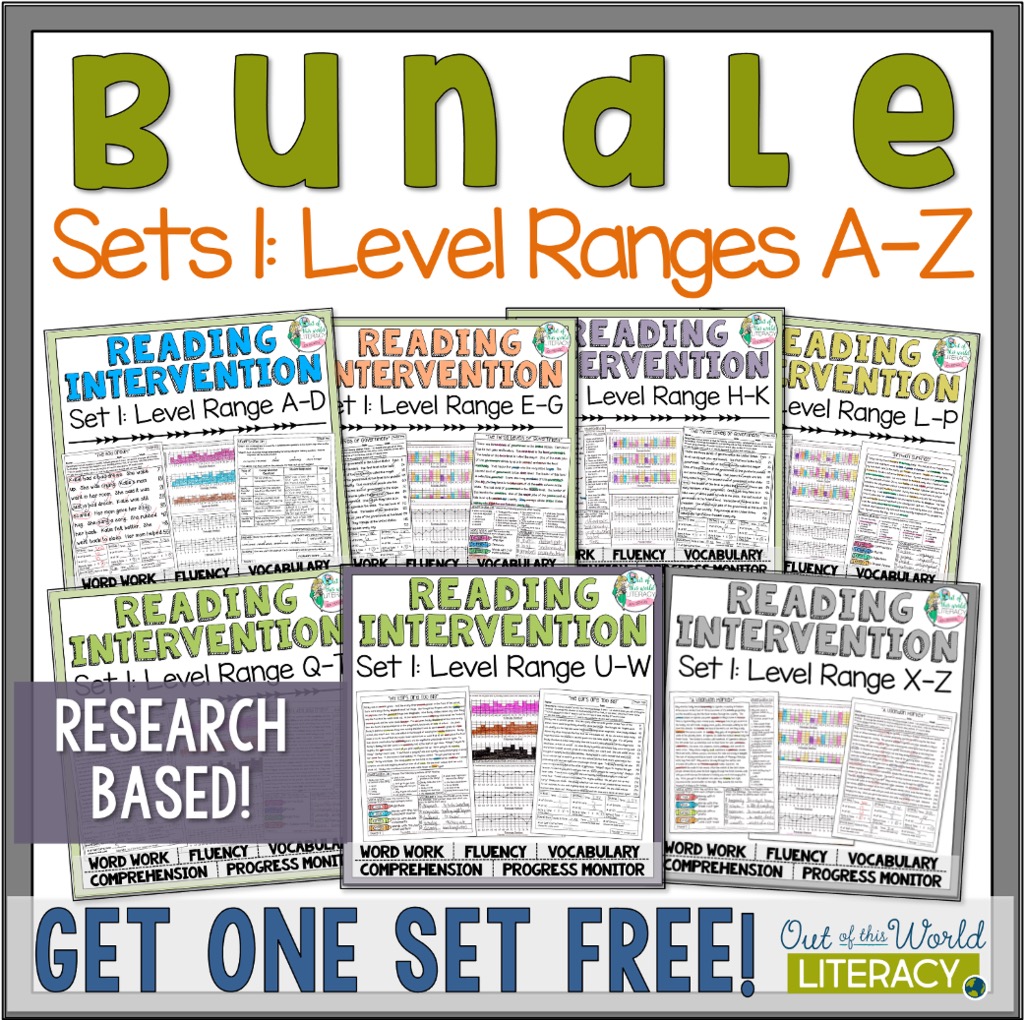
One of my ride-or-die resources is Jen’s Intervention Passages. You can use this resource for literally EVERYTHING. For center work, I use it to monitor comprehension, context clue skills, and word work practice. I typically break it up into manageable sections.
Day 1: Read the story and complete Comprehension Questions
Day 2: Reread and complete Word Work
Day 3: Reread and work on Vocabulary
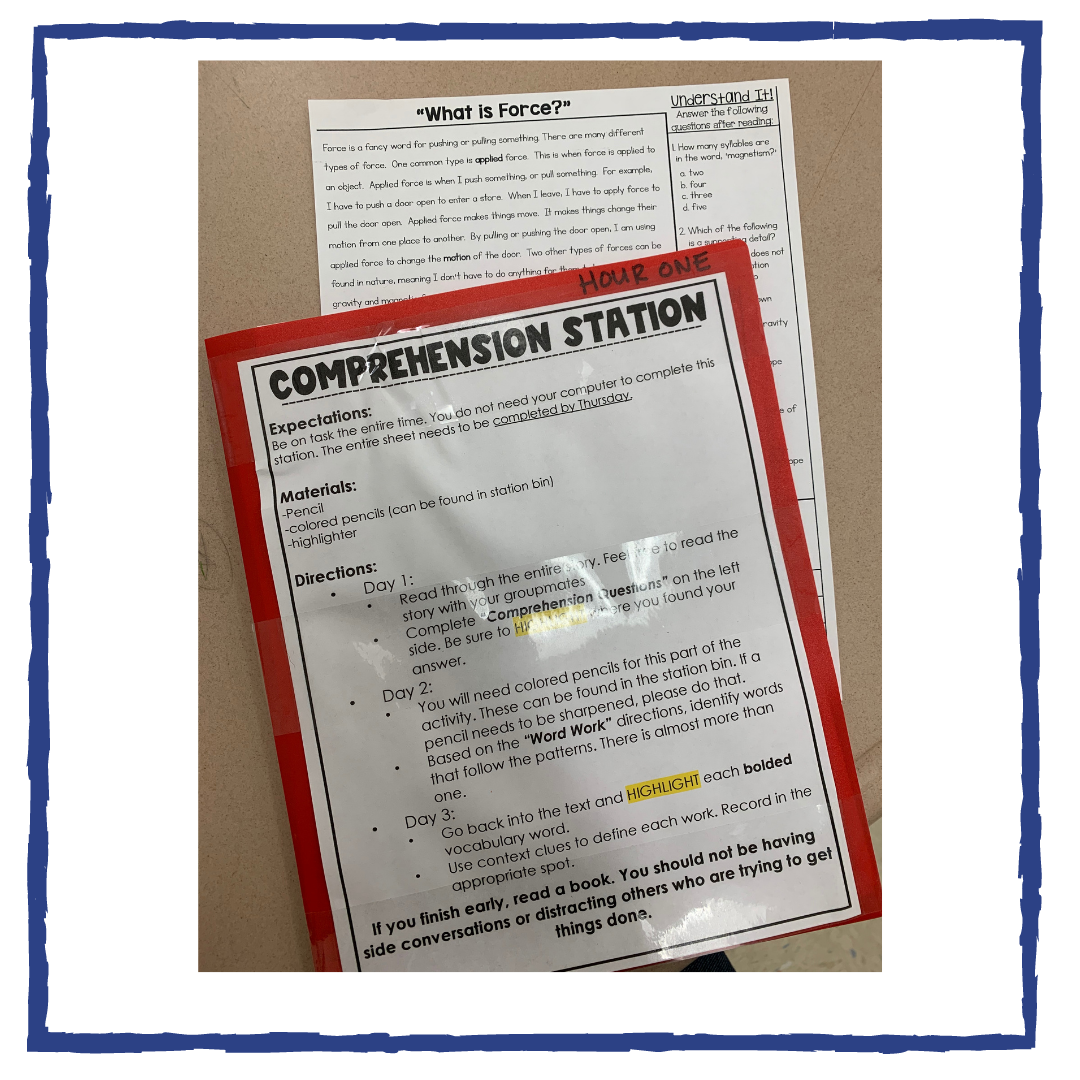
Yes, there are days students work ahead and that is okay. As long as they move to independent reading after and do not bug other students.
I choose a text set that is at their independent level. It is important the students feel successful the second they enter the text. This way, I know they can complete it by themselves and not ask me for help every 2 seconds.
Vocabulary Station
Jen has SO MANY awesome vocabulary resources. One that I have been recently obsessed with is her Vocabulary Passages. Grades 2-8th are available!
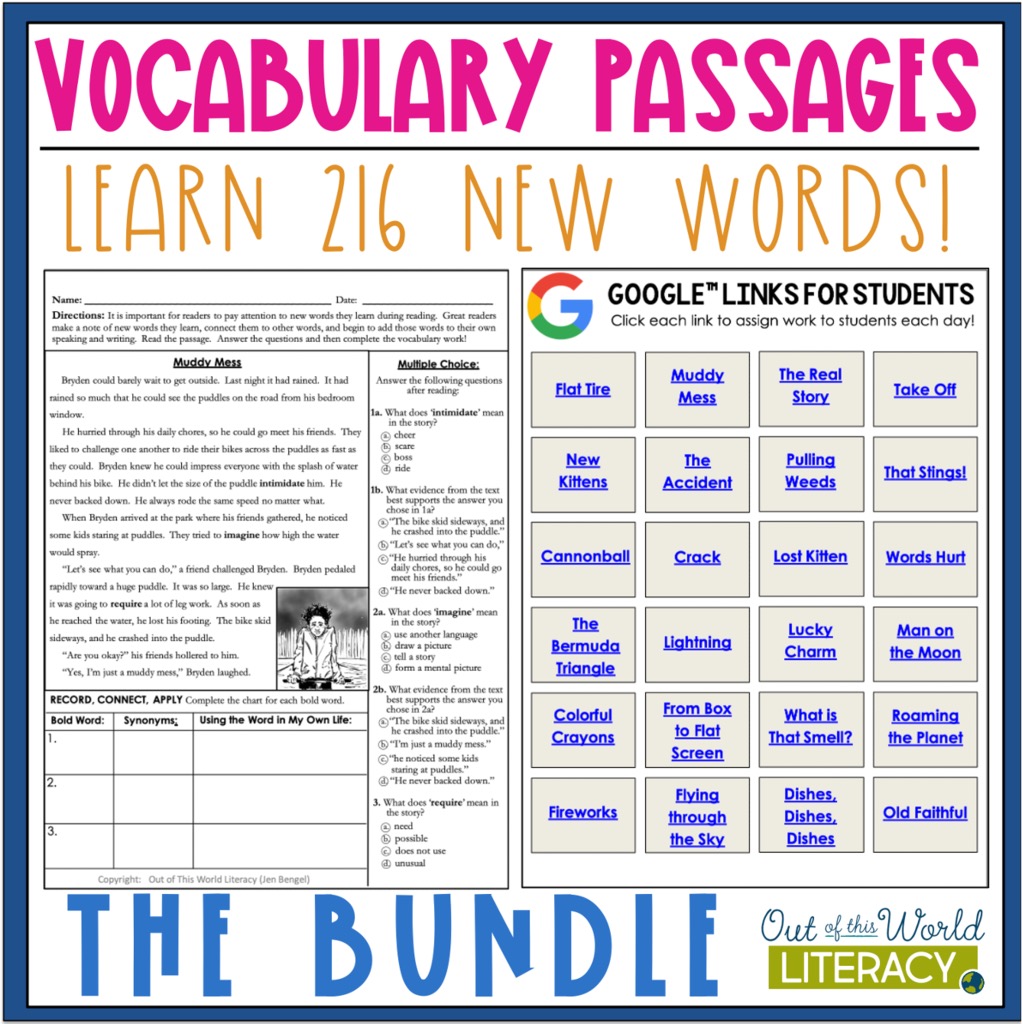
What I appreciate about this resource the most is each passage targets 3 vocabulary words within fiction and informational texts. Each text is high-interest and it really helps teachers see if students have developed grade-level context clue skills. Each text requires students to define each word, identify supporting sentences, and have a chance to connect each word to their lives. This helps make sure the words stick!
Guided Reading
I am a firm believer in guided reading in middle school classrooms. For many years, I taught 6th grade and I made sure my ELA block had time carved out for guided practice. There are so many moving parts in a classroom and it is so nice to sit and learn along with a small group of students. Recently, I have been using Digital Small Groups Reading Lessons. My current students need targeted practice and this resource does just that. Each passage focuses on a target skill, word work, and provides a spot for students to personally connect to the text.
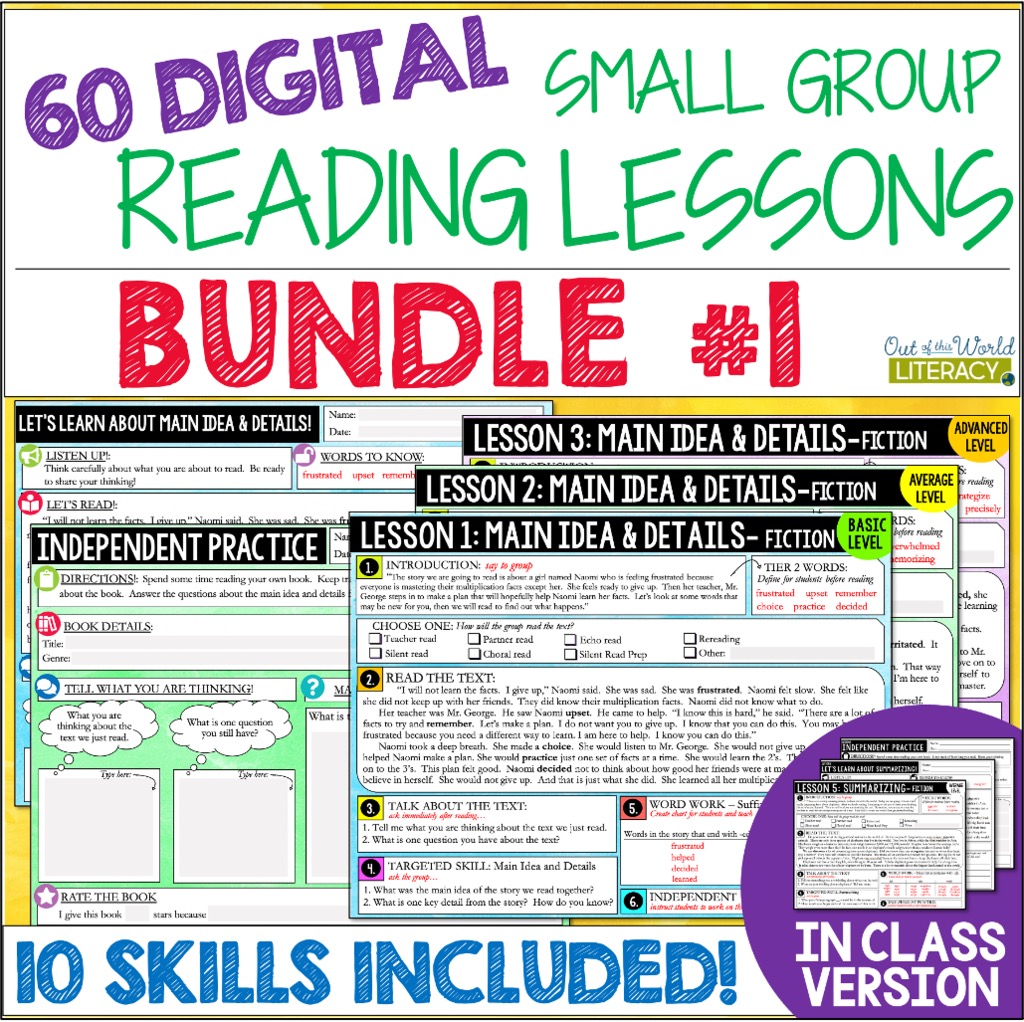
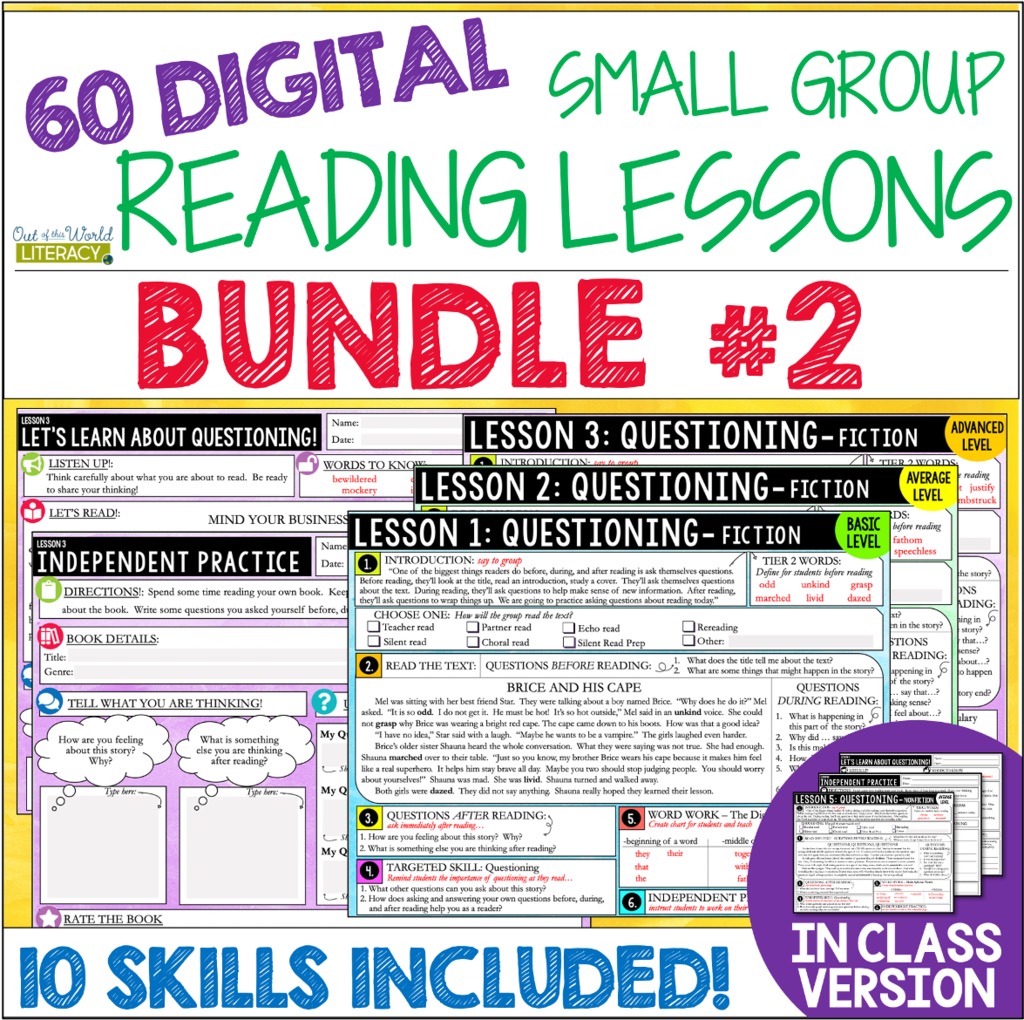
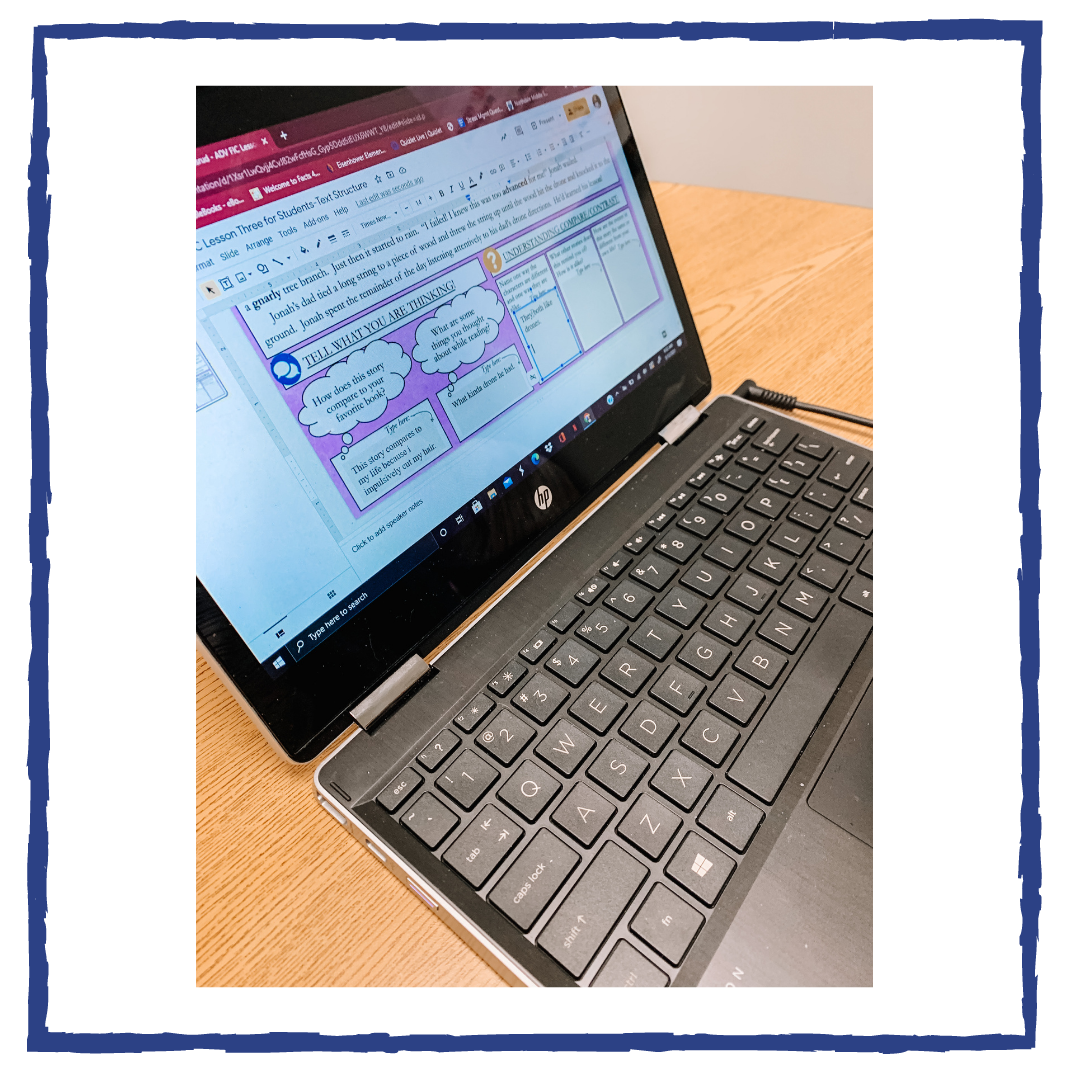
My 7th and 8th graders use the Advanced Level passages for both fiction and informational. The vocabulary and skill focus is perfect for what they are working on in my class. What I love most about this resource is that it provides an opportunity to practice the target skill in their choice books. This way you get instant data on what students can do independently.
You're an intervention teacher, so how would this look in a general ed middle school classroom?
Most middle school ELA/Reading classrooms run anywhere between 40-90 minutes. When I was teaching 6th grade ELA I would spend the first 15 minutes in a mini-lesson. The mini-lesson would be focused on reading skills or strategies. Then, students would move into centers.
Centers should run between 12-15 minutes. This is a time for students to show their progress towards the lesson goal. Whether they are working on carefully selected texts or independently reading, you will be able to gather such valuable data. Typically, I have 4-5 stations students work through. These centers include…
-Independent Reading: Allow kids to read books for fun with no strings attached
-Word Work/Vocabulary: Students practice and work on our weekly vocabulary. You can find 6th grade’s vocabulary curriculum here and 7th grade’s here. Literally, this vocabulary curriculum is LIFE CHANGING.
-Weekly Skill/Strategy Practice: This center focused on what the students were learning about that particular week. Jen has a plethora of resources you can use for this, including the Intervention Passages mentioned above. This way you can provide students with work that is right at their level. Don’t forget Jen has Comprehension Centers and Comprehension Passages that would also work perfectly for this center.
-Guided Reading: As mentioned before, this is a time to really target a student's specific needs. Whether students are struggling with comprehension skills/strategies or need extra support with phonics, Jen has you covered. Be sure to check out my recent blog post all about middle school phonics interventions!
Feeling overwhelmed with all of these amazing resources at your fingertips? Be sure to check out Jen’s FREE curriculum guide. This will help you organize your daily schedule using all things Out of this World Literacy!
We'd love to hear from you! Comment below on how these resources have made a difference in your classroom!
Happy teaching!
Jen & Hannah
- Follow Jen on Facebook
- Join Jen on Instagram
- Join Hannah on Instagram
- See what’s new on Pinterest
- To see more literacy support visit jenbengel.com


 Tier 1 is known as the start of literacy instruction. It is the time when educators teach the entire class a lesson. It is almost always based on a specific grade level standard that needs to be covered and is appropriate for the average reader at that grade level. So tier 1 instruction is the overarching blanket of instruction that every reader at that grade level should receive. Often time for the majority of students, this is the most instruction that they need before going off to practice the skill on their own. However, some students are reading below grade level, or beyond their grade level, and these students require additional support.
 Students reading 1 or 2-grade levels below their matching grade level need additional support on top of their tier 1 instruction, this is known as tier 2 instruction. In a tier 2 level of instruction, students meet in groups of 3, 4 at the most, to receive additional support on top of their whole group tier 1 instruction. This instruction will target a specific skill that students have demonstrated a lack of understanding in. Typically a research and evidence-based intervention program is used to provide instruction. Usually this happens about 3 to 4 times a week here. Again, this can vary based on schedules and student needs. Tier 2 interventions last approximately 20 minutes. They can be led by the classroom teacher, a specialized teacher, or maybe even a trained aid, tutor, or school volunteer. To be effective the intervention program must be implemented with fidelity. Often times the teacher collects data in the form of running records and comprehension checks. On average, in a tier 2 intervention, the teacher conducts a running record on each student either weekly or bi-weekly to track reading progress. This also allows you to monitor whether the student is making gains with this intervention.
 When a student does not show enough progress through data collection in a tier 2 intervention, he/she may require a more intense form of instruction. This is known as a tier 3 intervention. In tier 3 interventions the instruction is often more intense, it lasts longer, and it is more individualized. It will happen on a one-on-one basis. More data will be collected in a tier 3 intervention as well. This is often for students who are 2 or more years below their grade level. Running records are typically taken weekly and more data for progress monitoring is collected. The type of instruction in tier 3 is often the same research or evidence-based curriculum being used in tier 2 but at a more intense one-on-one support level. If a student still is showing no signs of progress after going through all tiers of instruction, it may be time to explore more alternative options for instruction, such as testing for special education services.